Mold Remediation Seattle
Mold remediation differs from a surface wipe-down. Cleaning visible spots with store-bought spray removes color but leaves rooted hyphae inside porous drywall and framing, and colonies regrow within weeks in Seattle's…
Mold remediation differs from a surface wipe-down. Cleaning visible spots with store-bought spray removes color but leaves rooted hyphae inside porous drywall and framing, and colonies regrow within weeks in Seattle's…
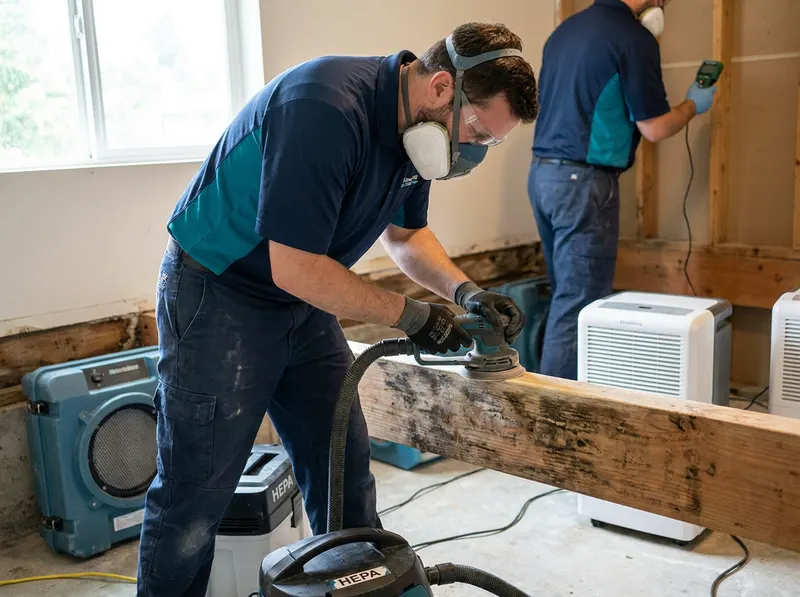
Mold remediation differs from a surface wipe-down. Cleaning visible spots with store-bought spray removes color but leaves rooted hyphae inside porous drywall and framing, and colonies regrow within weeks in Seattle's humid shoulder seasons. Remediation isolates the work zone with 6-mil poly containment, runs negative air pressure through HEPA-filtered machines so spores cannot migrate to clean rooms, physically removes contaminated porous material, and dries the cavity below 16% wood moisture content before rebuilding.
The scope depends on where the growth sits. Crawl spaces under older Ballard and Wallingford bungalows are the most common Seattle mold source, dirt floors, poor vapor barriers, and standing groundwater feed colonies on floor joists and subfloor. Basement daylight units in Beacon Hill and Rainier Valley see mold along the base of foundation walls where hydrostatic pressure pushes moisture through concrete. Bathroom and window-frame mold in apartments across Capitol Hill and the U-District is usually smaller and more contained. A licensed inspection identifies the moisture source first, because remediation without fixing the leak or humidity problem simply resets the clock.
Size drives both cost and method. The EPA guideline treats areas under 10 square feet as small and often manageable with contained cleaning; areas over roughly 100 square feet warrant full containment, negative air, and professional PPE. A single moldy window return might need only removal of a two-foot drywall section; a crawl space with growth across 400 square feet of joists needs sistering, encapsulation, and a new 6-mil vapor barrier. Clearance testing, an independent air sample compared against an outdoor baseline, confirms the space is safe before reconstruction, and most Seattle real-estate transactions and landlords require that written clearance.
Mold remediation pairs with, but is not the same as, water extraction or structural drying. If a pipe burst last night and there is no visible growth yet, emergency water extraction and drying prevents mold from starting. If growth is already visible and fuzzy, remediation is the correct service. A leak older than 48 hours in a warm cavity almost always means both are needed.
Every job gets a firm, written price after a free on-site visit.
Tell us about your mold remediation job in Seattle and we'll send a clear, written quote, usually the same day.