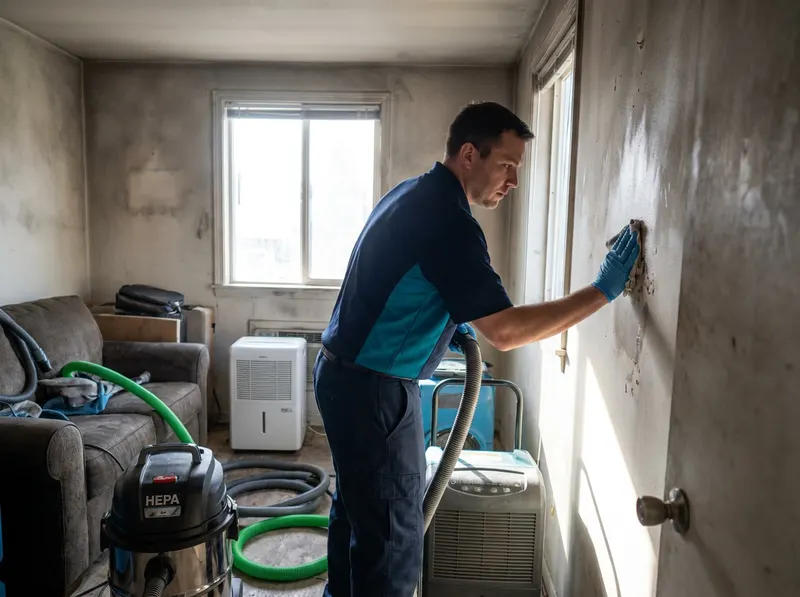
Smoke damage is not one substance. A grease or protein fire from a kitchen in Ballard leaves a thin, sticky, high-odor film that hides on cabinet tops and ceiling paint, while a wood or paper fire leaves dry, powdery gray soot that smears if wiped wrong. Synthetic materials, couch foam, carpet backing, electronics, produce black, corrosive smoke that etches metal and glass within days, so appliances and light fixtures near the burn need cleaning early. Restoration crews test the soot type first, because the wrong cleaning method drives odor deeper into drywall instead of lifting it.
The work follows a set sequence. First, emergency board-up and roof tarping secure the structure, common after Seattle fire crews cut ventilation holes. Second, standing water from hoses and sprinklers is extracted and the building is dried, since a wet interior in the Puget Sound climate grows mold within 24, 48 hours. Third, soot is removed from surfaces with dry sponges, HEPA vacuums, and surface-specific cleaners. Fourth, odor is neutralized using air scrubbers, thermal fogging, or ozone in sealed rooms, masking sprays alone fail because smoke molecules embed in porous framing. Fifth, damaged materials that cannot be salvaged are removed and the space is prepped for rebuild.
Decision-fit matters here. If a fire scorched only one room and the smoke stayed contained, targeted soot cleaning plus HVAC duct decontamination is usually enough and keeps cost near the low end. If smoke traveled through open floor plans or the return-air system, common in older Capitol Hill and Wallingford homes with a single central furnace, whole-home deodorizing and duct cleaning are needed, and skipping the ductwork is the most common reason odor returns weeks later. A structural fire that reached framing, wiring, or the roof deck shifts the project from restoration into partial reconstruction, which is quoted separately from the cleanup.
Seattle homes add local wrinkles. Craftsman and box houses in Green Lake and West Seattle often have balloon framing, where fire and smoke climb inside wall cavities to the attic, so soot can appear far from the burn. Multi-unit buildings near downtown trigger shared-wall smoke migration, meaning neighboring units may need inspection even if flames never reached them. Fire debris hauled off in King County must go to approved disposal, and any asbestos in pre-1980 materials disturbed by the fire requires testing before removal.